
According to David Jackson, General Director of Colliers Vietnam, for foreigners investing in real estate in Vietnam, trust is an important factor. Trust can only be obtained after investors have conducted thorough and objective analysis and research.
Foreign capital still flows into Vietnamese real estate despite the pandemic
Real estate continues to rank 3rd in attracting FDI with total investment soaked to USD 1,16 billion in the first 7 months. Some real estate segments continue to grow strongly despite the pandemic, such as urban, logistics and industrial real estate acquiring the largest FDI since the beginning of the year, accounting for nearly half of 30 approved projects with a total value of USD 538 billion.
In fact, besides industrial logistics real estate, housing real estate, especially integrated urban areas, has been an attractive destination for foreign capital. Regardless of the pandemic, foreign investors reportedly cooperate with local investors to develop urban area projects with a total investment of multi-billion dongs.
For example in Q3/2021 (July, August and September), when Covid-19 outbreak was at its peak in Vietnam, several housing real estate deals were still closed by foreigner and local investors in the market. Specifically, Nam Long has partnered with Japanese corporations 3 times, continuing to develop urban areas in the neighboring provinces of Ho Chi Minh City in the last 3 months.
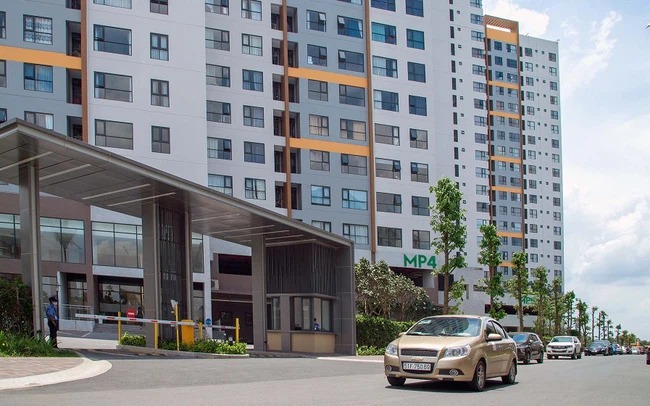
In July 2021, Nam Long and Nishi Nippon Railroad first collaborated to develop EHome – an "affordable" apartment, a product for the community within the 4.5-ha EHome Southgate project in the 355-ha Waterpoint township, Ben Luc, Long An. The launch of this product surprised the market with a starting price of approximately VND 1 billion dong. The project comprises 7 blocks with more than 1,400 apartments on an area of 4,5 hectares, connected easily to the infrastructure of riverside city Waterpoint.
By August 2021, this local investor signed a strategic cooperation agreement with Japanese Hankyu Hanshin Properties Corporation to together develop the 170-ha integrated Izumi City in Long Hung, Dong Nai. With an estimated total investment of VND 18,600 billion, this project will ensure the sustainable development for Nam Long in the next 5 to 10 years.
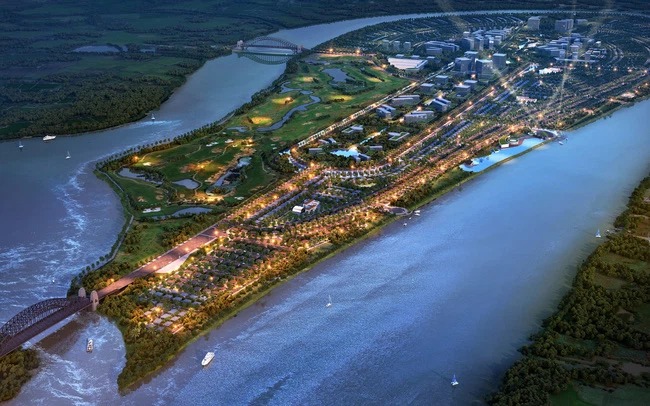
Despite the pandemic, multi-billion dong real estate projects were signed off by local and foreign investors.
Similarly, in September 2021, Nam Long and Nishi Nippon Railroad continued to work side by side in developing the 45.5-hectare Nam Long Dai Phuoc township in Nhon Trach, Dong Nai. At the moment, the investors have paid out 100% compensation for site clearance and land use fees, leveled land to a height of 2 meters, gotten approval for 1/500 planning and acquired a certificate of land use right. using land. According to the plan, the project will be co-developed by Nam Long and Nishi Nippon Railroad with mainly luxurious duplex and single villas.
According to Tran Xuan Ngoc, General Director of Nam Long Group, the recent partnerships with Japanese corporations to build large-scale townships in neighbouring provinces of Ho Chi Minh City has shown the complete trust of Japanese partners for products developed by Vietnamese enterprises.
Or, another recent partnership to be named is between Danh Khoi Group and the three Japanese partners, Sanei Architecture Planning and G-7 Holdings INC.
Through the support of Japanese giants, Danh Khoi Group launched many important real estate projects in major economic regions including Ho Chi Minh City, Binh Duong, Ba Ria – Vung Tau, Phan Thiet, Da Nang, Khanh Hoa, Quy Nhon, etc. Also thanks to these partnerships, Danh Khoi Group’s charter capital has increased more than 10 times within only 4 years from 2016 till now, along with the expanding coverage and rapid increase in project quantity. Particularly in 2020, Danh Khoi continuously carried out billions of dollars of M & A with a series of successful projects.
According to the group’s representative, Japanese investors always study the market, profitability and professionality of the project before making a decision. Only enterprises that are highly rated for their capacity, experience, capital and management will be selected.
For many years, Japan has demonstrated its position as one of the countries and territories investing the most in our country.
According to the Ministry of Planning and Investment, in the first half of 2021, Japan ranked second in the list of countries and territories investing in Vietnam with a total investment of USD 2.44 billion, an increase of 66.8% compared with the same period last year.
The cooperation between big foreign corporations and Vietnamese investors in large-scale residential real estate projects not only shows the stature and scale of the business but also the mutual trust between Vietnamese businesses and foreign investors throughout the development journey, creating their own remarks in the real estate market.
Trust is an important factor
David Jackson, General Director of Colliers Vietnam, when explaining why foreign capital still flows into Vietnam’s real estate, said that for foreigners investing in real estate in Vietnam, trust is an important factor. Trust can only be obtained after investors have conducted thorough and objective analysis and research.
With a population of 90 million people but a low urbanization rate of 40%, Vietnam’s real estate market still has a lot of room for development. High demand for housing while supply is not sufficient, along with the rapid growth of the middle class, have made residential real estate an attraction for foreign investors. Luxury real estate will also be backed as the number of super-rich people in Vietnam increases at a rate of 31% in the next 5 years to nearly 26,000 people with assets of more than USD 1 million (according to Knight Frank).
Real estate prices in Vietnam are still relatively low compared to other countries in the region. For example, the average house price in Ho Chi Minh City is 2,500 USD per m2 while in Singapore it is 17,000 USD per m2.
Besides, it is worth mentioning the marketability of industrial and logistics real estate segments. Data from the Vietnam Real Estate Association shows that as of July 2021, there are 335 industrial parks established across the country, of which 260 industrial parks have gone into operation at nearly full occupancy rate of 76%, and other 75 zones are under construction. The occupancy rate in northern industrial zones increased over the same period last year. In fact, the occupancy rate is 95% in Bac Ninh, 90% in Hanoi, 89% in Hung Yen and 73% in Hai Phong and in the South, it is 99% in Binh Duong, 84% in Long An and 79% in Ba Ria-Vung Tau.
The main reason is that logistics and industrial real estate are strongly promoted by the rise of e-commerce. Vietnam continues to be the preferred choice of many large international corporations in the effort to diversify supply chains through the "China plus one" policy.
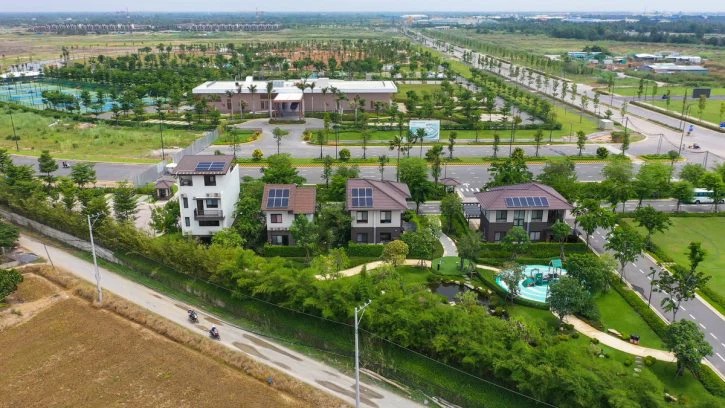
Urban real estate is the segment that receives the most orders from investors
According to a representative of Savills Vietnam, in the past, M&A projects often took place in the central districts or in the centers of major cities such as Hanoi and Ho Chi Minh City. However, land scarcity and high transaction prices have made these financial models no longer effective. As a result, demand and cash flow tend to shift to surrounding regions. There are two main factors driving demand today: Good traffic connecting to the inner city and Presence of reputable real estate developers in the market.
In which, the urban housing segment receives the most orders from investors. With a large population, high urbanization speed and rapid growth of the middle class, this is still the most profitable and potential segment for real estate investors in Vietnam.
Demand for industrial parks and logistics has also increased rapidly in the past 1,5 years. As Vietnam joined the EFTA, many large corporations have made Vietnam their destination. In addition, existing types of real estate, including office buildings, rental apartments with good location, good management and maintenance, long land use, are always preferred investment assets for foreign investors, who tend to look for long-term and stable cash flow. There are also records of investors from other industries expanding and diversifying risks by investing into real estate.
“In the long run, foreign investors, especially new ones, who have not invested in Vietnam, would still pay great attention to the real estate market. For many reasons, including difficulties in travel, they have not been able to successfully close the deals. Once the pandemic is over, this investment wave will enter the market. In the coming period, successful deals will be projects with clean land fun, transparent legality, properties in operation”, a representative of Savills said.
Source: CafeF


